The founders
Thomas Openshaw of Primrose Hill paid for it, Laurence Booth drew it, and masons whose names were never written down dressed every block by hand.
Truth noun in accordance with fact or reality
Services & church life · stthomasbury.orgA Christian presence in Pimhole since 1866
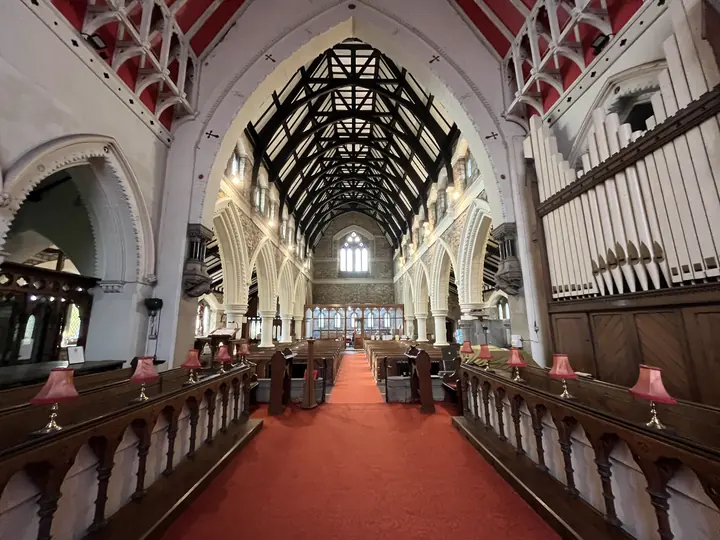
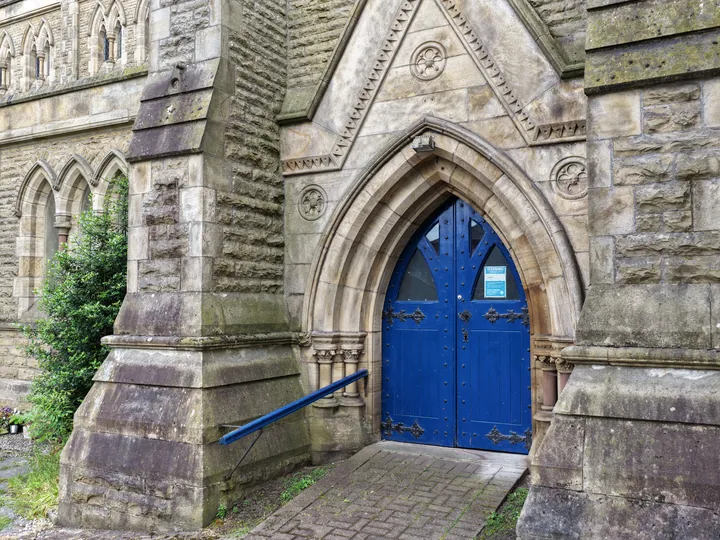
A marvelous Victorian church in the heart of Bury, this cornerstone, built on solid ground, was raised by people who believed in Christ alone. Still standing, still in use, and recorded here stone by stone.
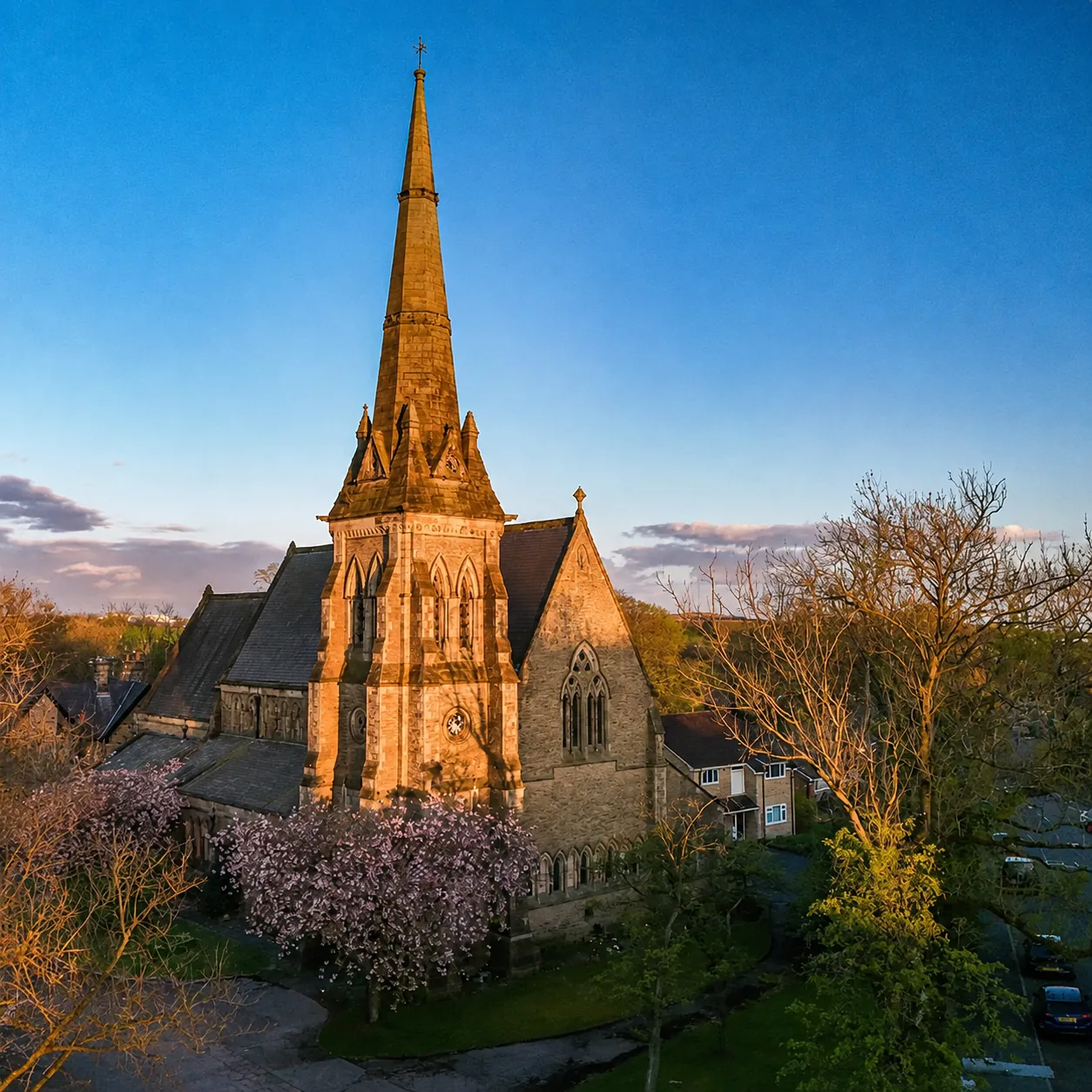
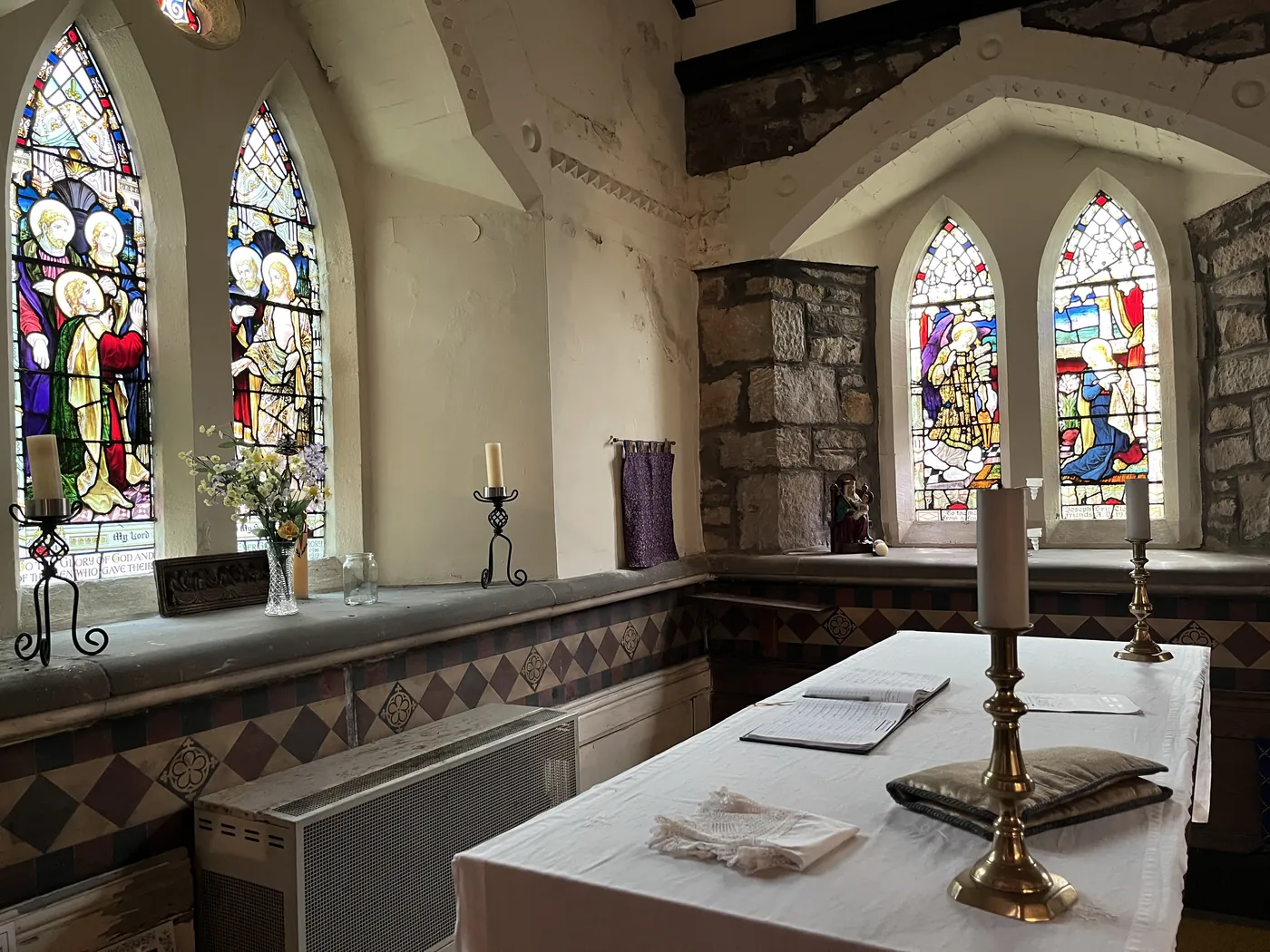
This site is about a building, the people who raised it, and the congregations who have kept it for a hundred and sixty years.
Who paid for it, who drew it, who cut the stone, what they carved where nobody would see, and why they bothered. It is told from the public record and from photographs taken from the air and from the floor of the nave. But make no mistake about why it was built: Jesus Christ is risen. A risen Christ changes what a life is for.
For the church as it is today — services, events, the team and how to get involved — go to the church’s own website.
stthomasbury.org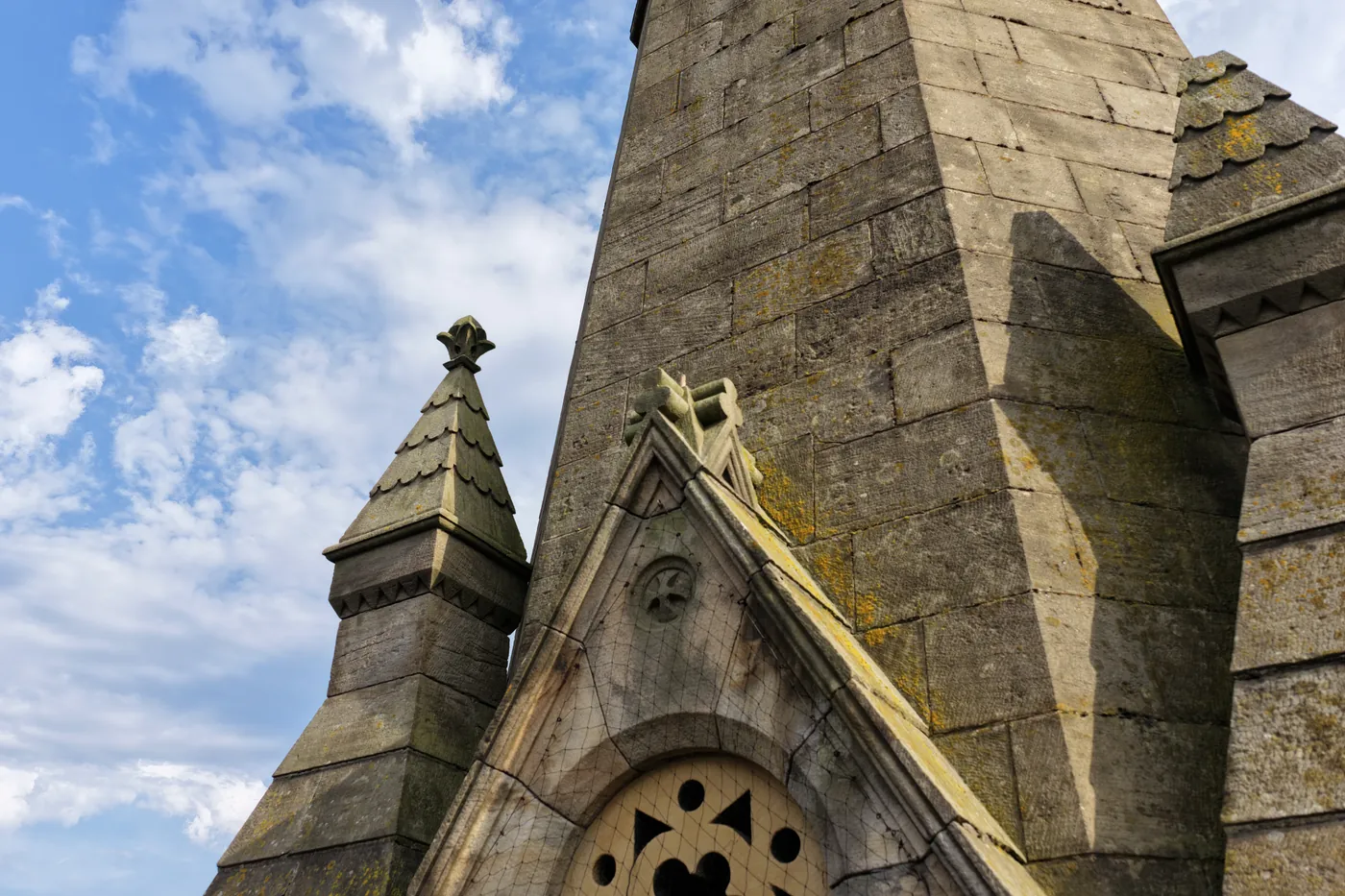
Why go to such trouble
In 1866 Bury ran on cotton, smoke and long hours. Thomas Openshaw of Primrose Hill could have spent his money on almost anything at all. He spent it on this.
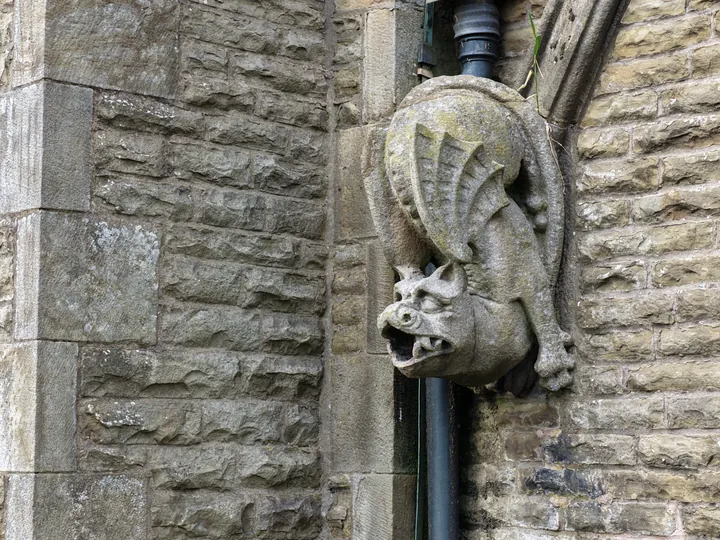
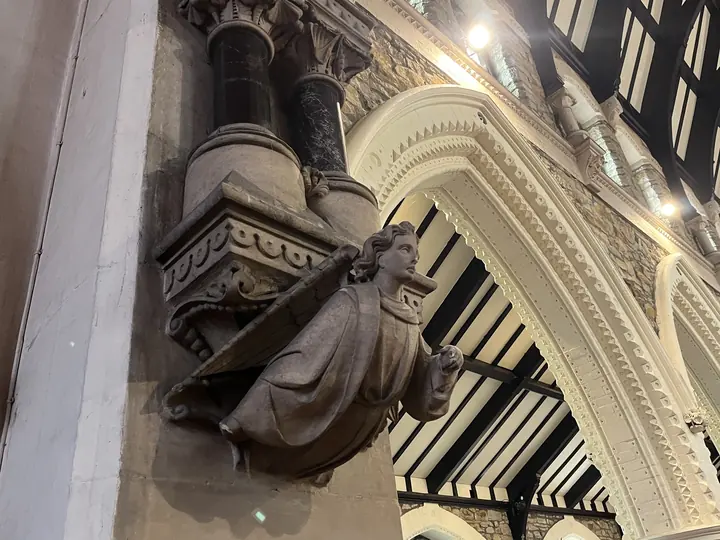
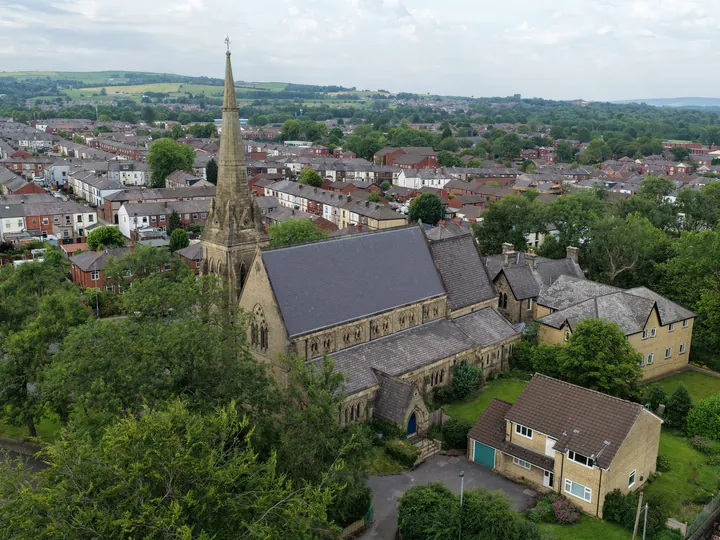
The architect, Laurence Booth, drew a spire and set it higher than every roof for streets around. Masons whose names were never written down dressed each block by hand, cut lancet after lancet, and carved a figure into the stone at the foot of that spire — where nobody standing below would ever see it properly. They finished it anyway.
Nobody goes to that trouble for a hobby. Nobody carves for an audience that cannot see. They built like this because they were convinced of something very specific: that God became a man, that he was executed on a Roman cross outside Jerusalem, and that three days later the tomb was empty.
If that is true, no quantity of good stone is excessive. If it is not, this is the most expensive mistake in Bury. They gave their answer in sandstone — and it has been standing for a hundred and sixty years.
The reason for all of it
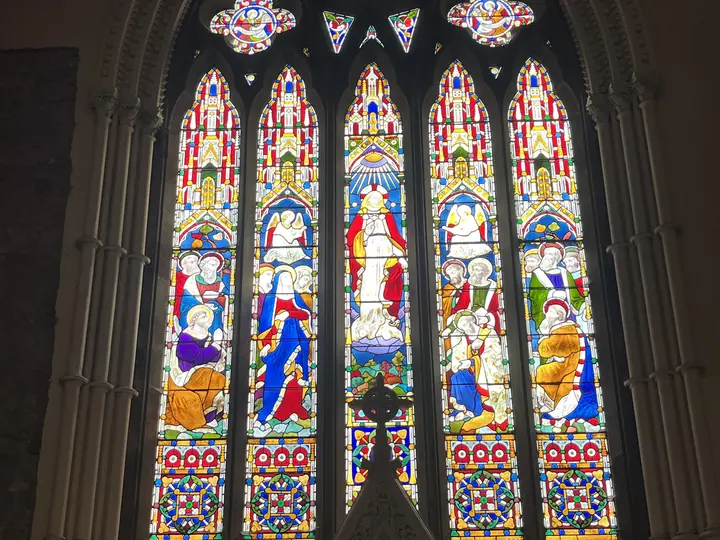
Not to the stone. Not to the glass, the carving, or the memory of the people who paid for it. Beauty here is a signpost — and a signpost that asks to be worshipped has failed at the one job it had.
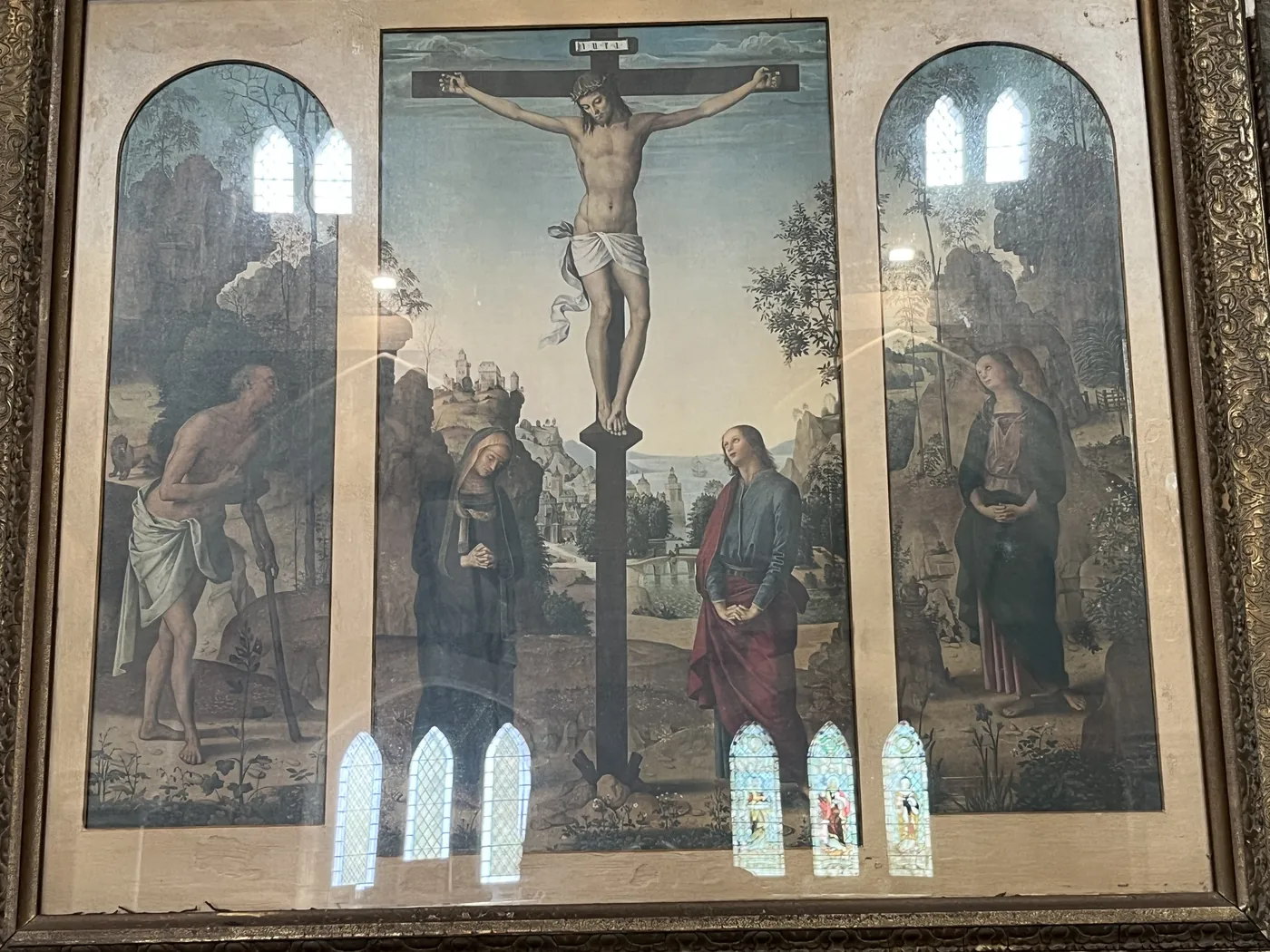
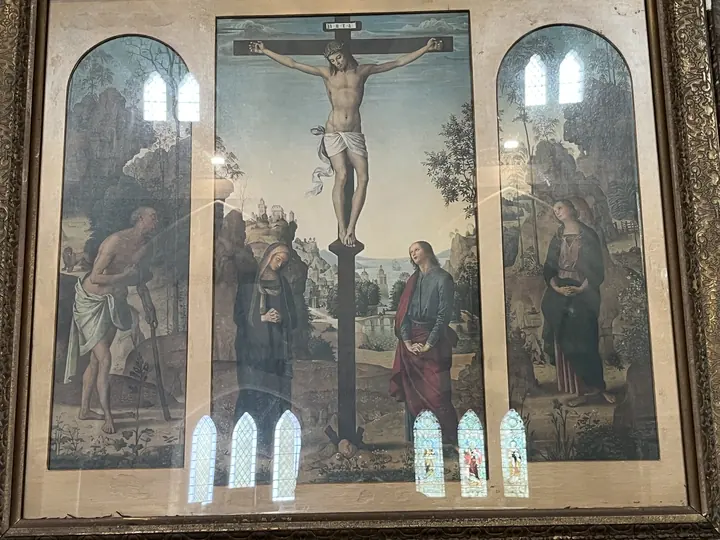
Everything in this building leans in a single direction. The last stone on the roofline is a cross. A crucifixion is painted on the wall inside. And a cross stands at the centre of everything that happens at the table. They are there because of what happened on the original: Jesus Christ paid, in full and in our place, a debt that none of us could cover.
That is why we kneel — not out of fear, and not for a building. The price is already settled. The life it bought is meant to be lived: honestly, mercifully, and without ever pretending we earned it.
God forbid that I should glory, save in the cross of our Lord Jesus Christ.
Galatians 6:14
Truthnoun in accordance with fact or reality
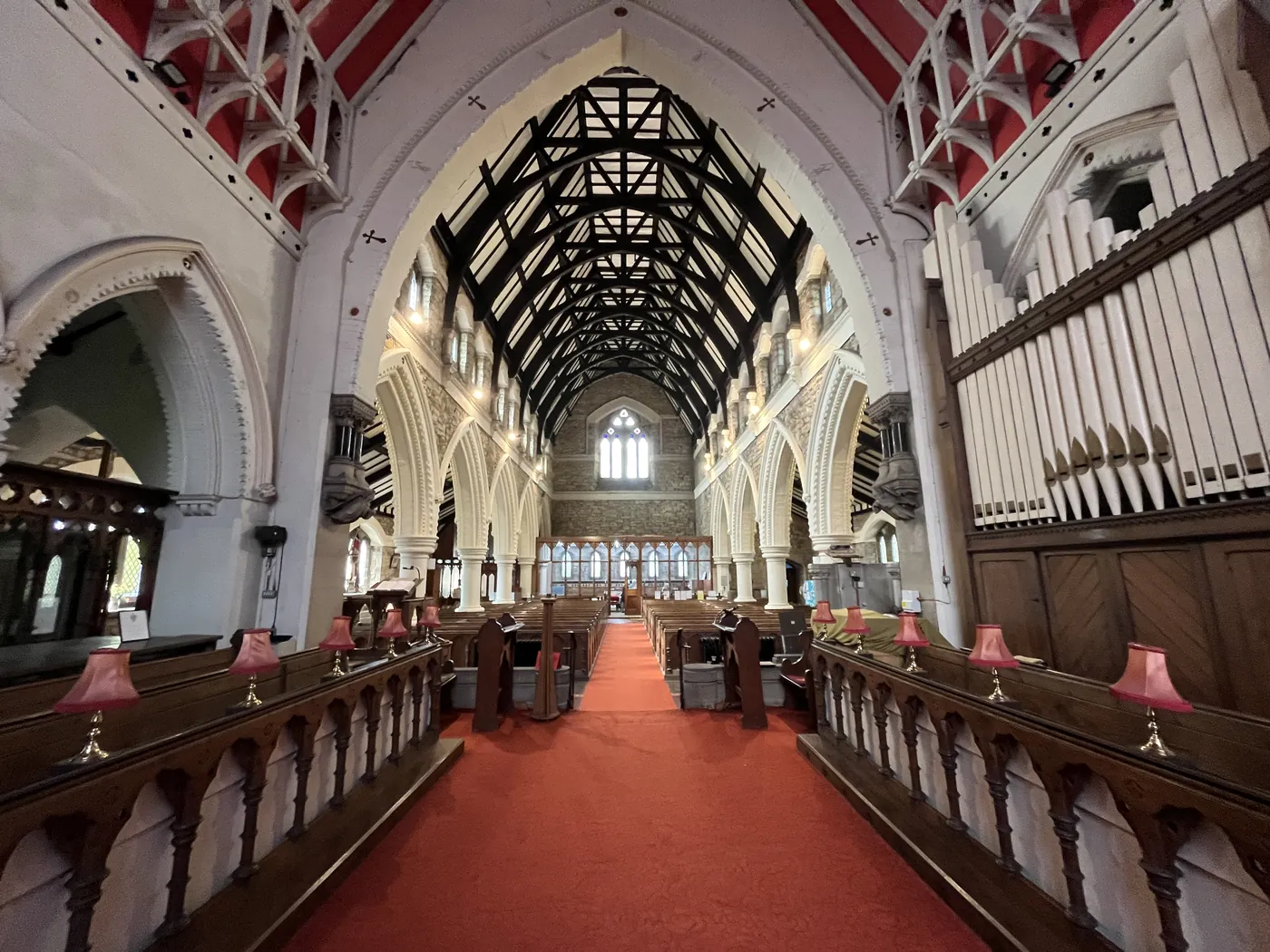
The church today
St Thomas is not a monument. A congregation worships here every week, as one has since December 1866, and the building is still doing the job it was raised for.
Service times, events, safeguarding, giving and the people to contact are all published by the church itself, and this site deliberately does not repeat them — they change, and the church’s own website is where they are kept right.
Visit stthomasbury.org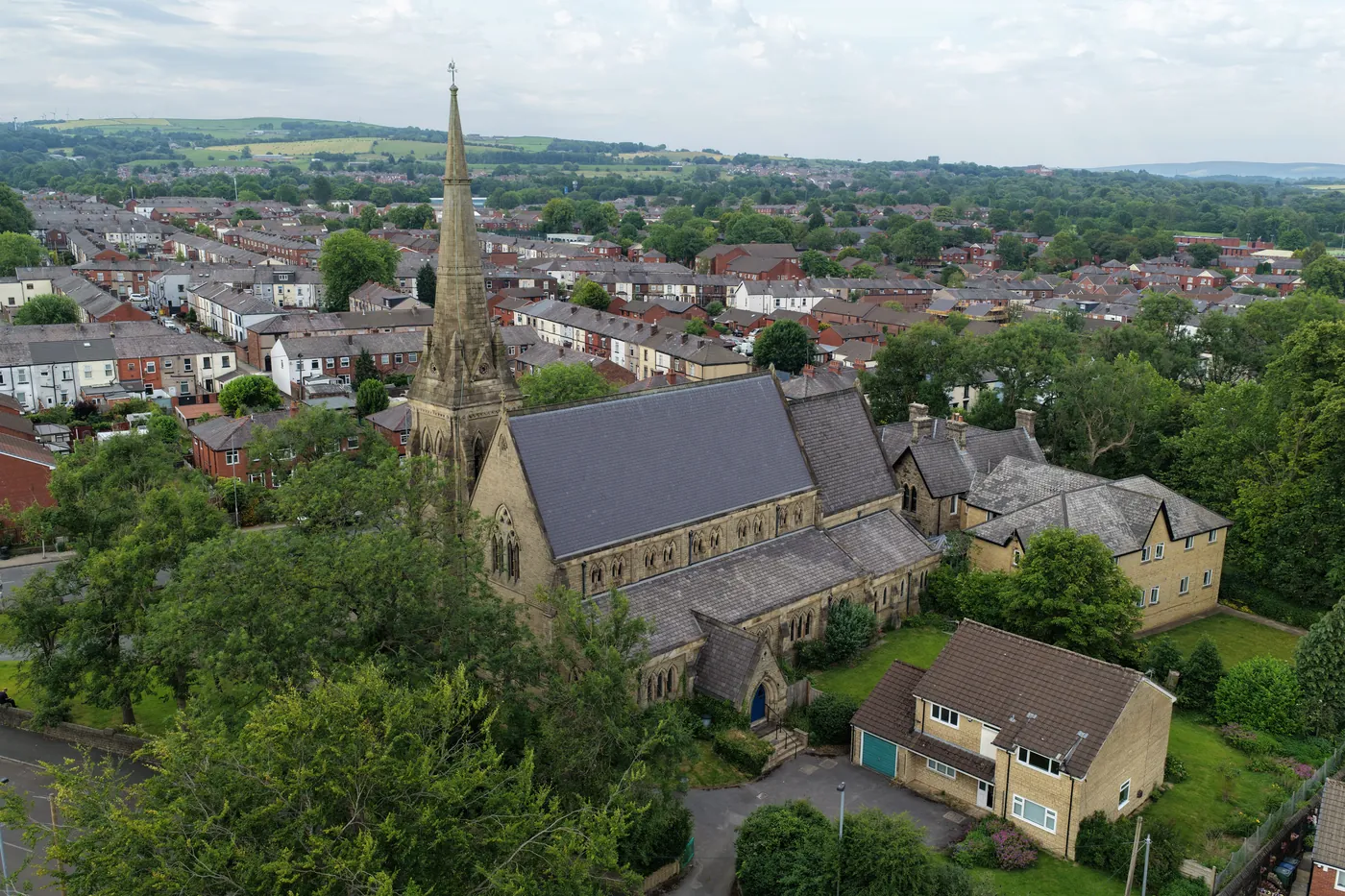
The people
Buildings outlive the people who raise them. The people are the point; the history of St Thomas is theirs.
Thomas Openshaw of Primrose Hill paid for it, Laurence Booth drew it, and masons whose names were never written down dressed every block by hand.
The parish of St Thomas was formed from parts of Bury and Prestwich, and the first registers of baptisms, marriages and burials began — a written record that has run ever since.
St Thomas, St Peter and Holy Trinity came together as the Parish of Bury, Roch Valley: three congregations, one shared calling.
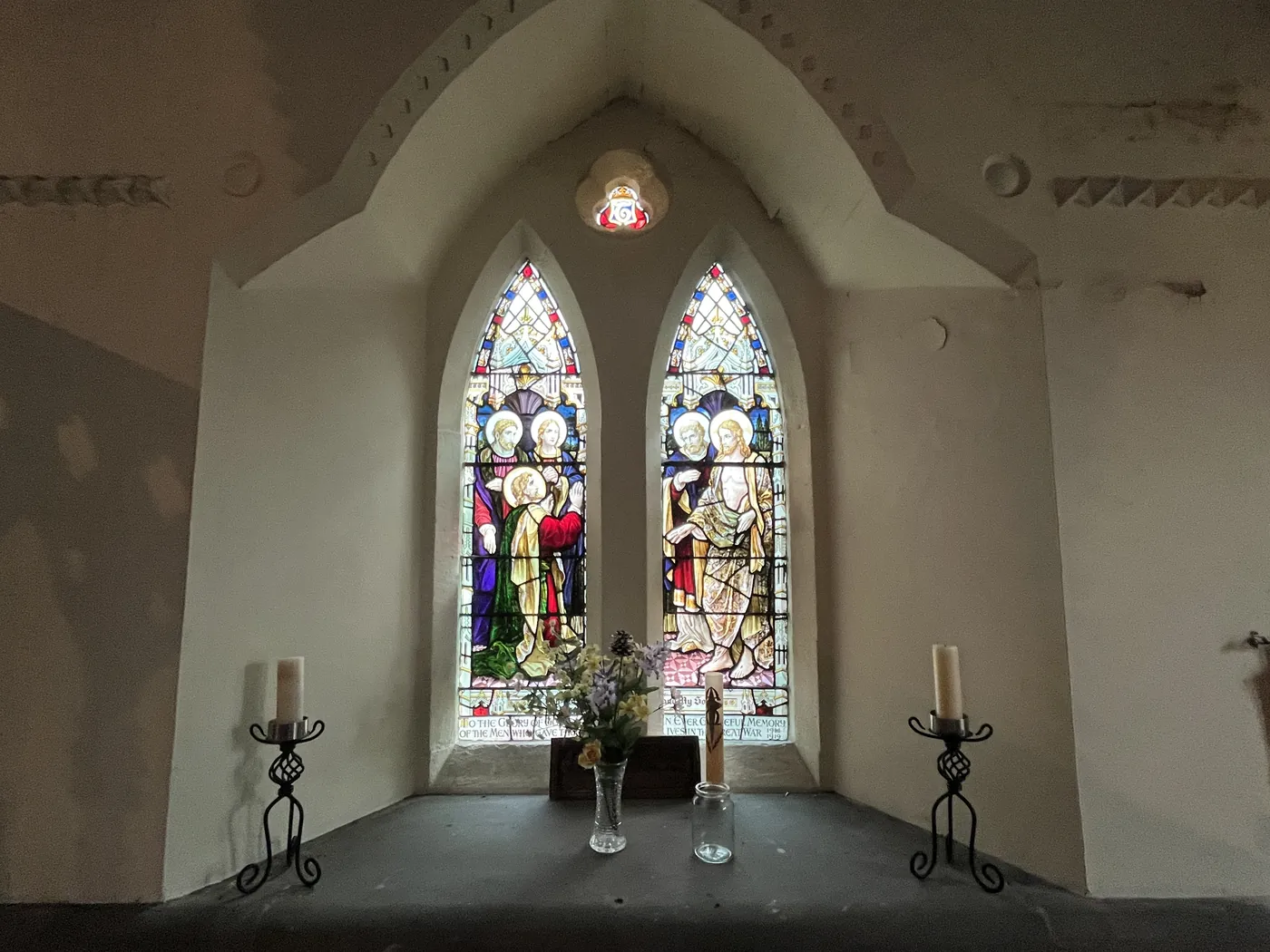
A new chapter · 2026
In 2026 the Diocese of Manchester announced a new season for St Thomas: a partnership between the congregation already worshipping here and a new planting team.
The vision is not complicated: prayer, shared mission, honest care for a remarkable building, and a longing to see lives changed as people meet Jesus for themselves. The chapter is being written now, and the church tells it in its own words.
Look closer
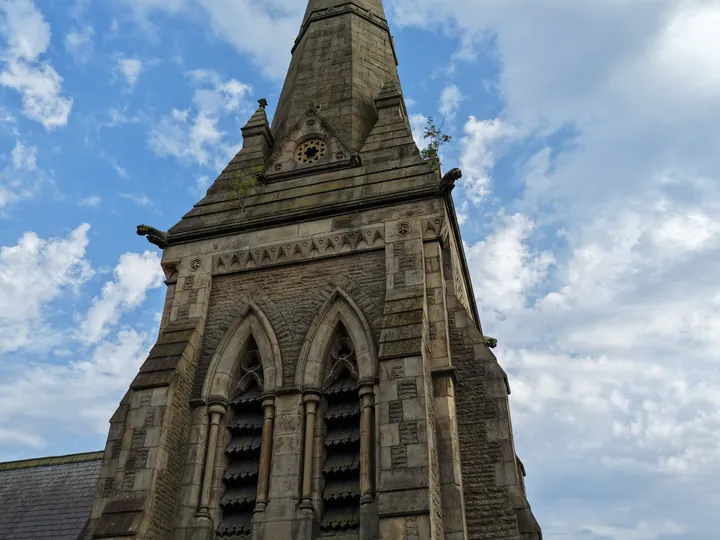
Come to me, all you who are weary and burdened, and I will give you rest.
Matthew 11:28